36 Hours in the Wild: Behind the Production of PREM’s Original Series
Taking an idea from a planning meeting to an outdoor series takes careful preparation, technical production and a team ready to adapt. For PREM, 36 Hours in the Wild brought those skills together in one of our most ambitious productions to date.
Following a very successful first series, we’re looking back at the work behind the camera and what it took to turn an outdoor challenge into a series people wanted to follow.
An original PREM production
36 Hours in the Wild brought together eight Staffordshire business and community figures for physical and mental challenges, all while supporting local charities.
Across six episodes, viewers followed the competition, teamwork and personal moments that made the series. For our production team, the task was to capture those moments as they happened and shape them into a clear, engaging story.
A technical setup built around the action
An outdoor production presents a different set of demands from a controlled studio shoot. The action moves, conditions change and reactions happen once.
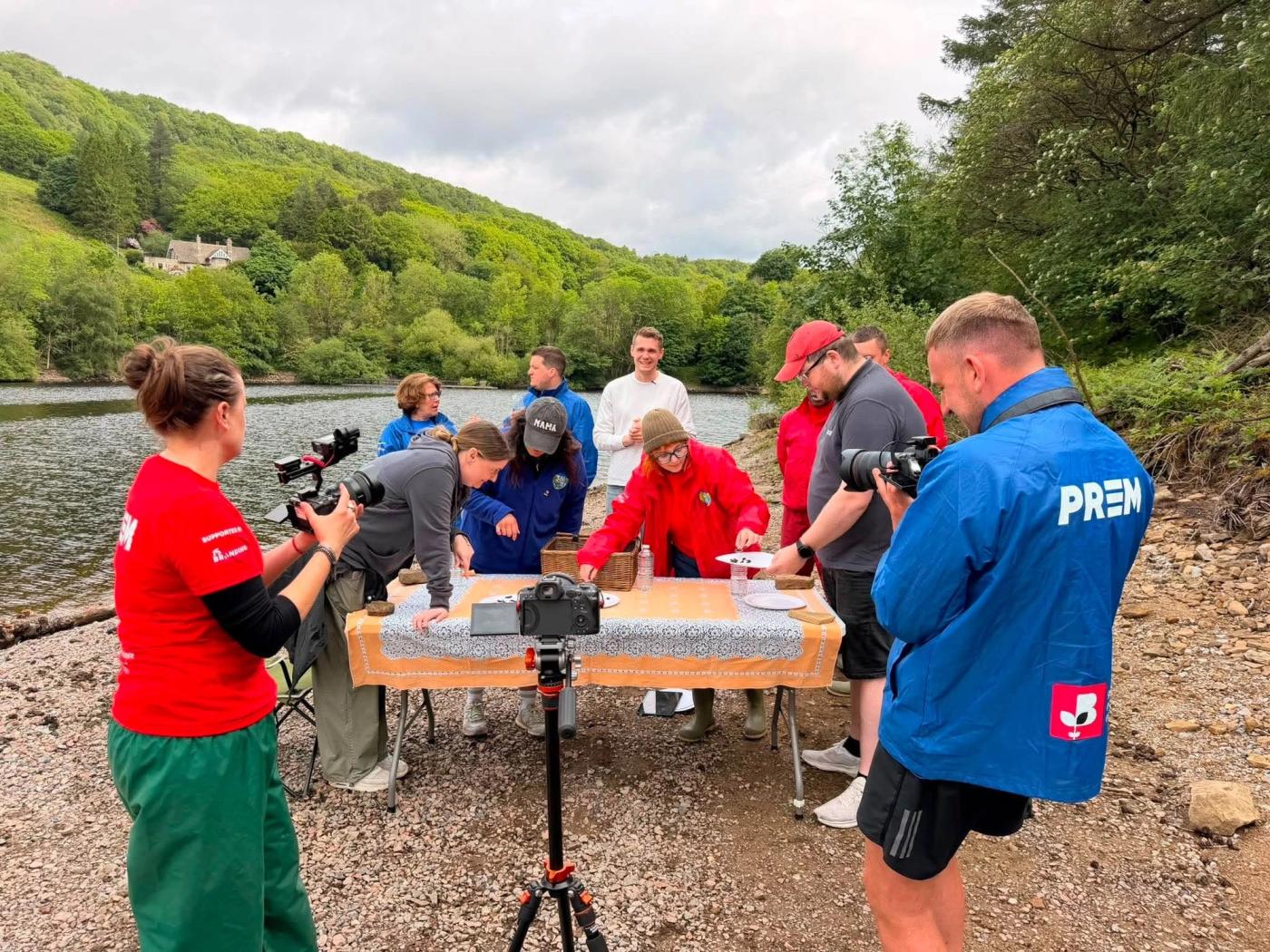
36 Hours in the Wild required a complex technical production setup, with cameras, sound and crew working together around the challenges. The aim was to capture the action clearly while keeping the participants and their experiences at the centre of the programme.
Camera coverage needed to give viewers a sense of each challenge while capturing the smaller reactions that helped tell the story. Clear audio mattered equally. Conversations, instructions and responses all helped audiences follow what was happening.
The technical work supported a straightforward goal: letting viewers concentrate on the people on screen.
Planning for an unpredictable shoot
The first series involved months of planning, filming and editing. Creative development, production and promotion all formed part of PREM’s work on the project.
Preparation gave the team a structure to work within. Filming still required flexibility. A challenge might provide the main action, but a conversation or an unexpected reaction could become an equally valuable part of an episode.
That meant making decisions throughout the shoot about where to focus attention and how to capture enough context for the edit.
Turning the footage into a series
The production continued long after filming finished.
In the edit, the task was to give each episode its own pace and structure while keeping the full series connected. Viewers needed to understand the challenges, follow the competition and get to know the people taking part.
That balance matters. Too much explanation slows an episode down. Too little leaves the audience without the context they need.
The finished series brought together the competition, humour and personal experiences, with each episode building on what came before.
What the first series showed
The success of the first series reflected the work across the whole production, from developing the format to delivering the final episodes.
For PREM, it demonstrated our ability to create and produce original content that combines technical demands with human stories. It also gave us a foundation to build on as we develop the next series.
If your business has an idea for an original series, branded content or a location-based video production, speak to PREM about bringing it to screen.